


I'm looking to book at
We now have 2 locations to serve you:
We now have 2 locations to serve you:
Dealing with active acne is difficult enough, but the marks left behind after the breakout heals can be just as frustrating.
At Deco De Mode, we see this every day. You might have cleared the acne, but you are left with uneven texture, shallow pits, or persistent red and brown marks.
The good news is that while scarring takes patience to treat, mild scarring is highly responsive to the right evidence-based care.
When an acne cyst or pimple forms, it causes intense inflammation and damage to the skin tissue. As the skin tries to heal that damage, it produces collagen.
If the body produces too little collagen, a depression or pit forms. If it produces too much, a raised scar forms.
Mild scarring usually refers to superficial texture changes. These are shallow indentations that might not be visible in soft light but make the skin look uneven in harsh lighting or when wearing foundation.

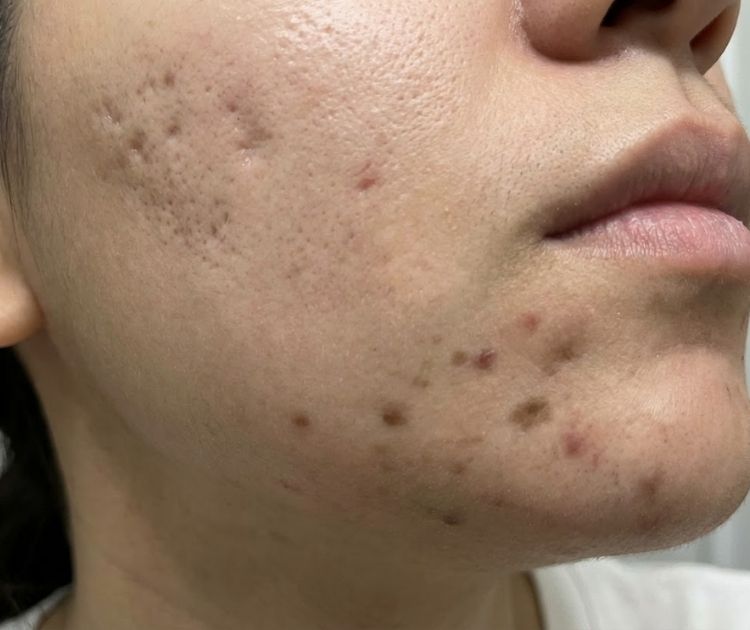
Many people confuse scarring with the red or brown marks left behind after a pimple. This is called Post-Inflammatory Hyperpigmentation (PIH).
While these aren't technically "scars" (they are pigment changes, not texture changes), they often occur alongside scarring. We treat both, but the approach is slightly different.
Note: If you have very deep, narrow "ice-pick" holes or painful raised keloids, we recommend seeing a dermatologist. For widespread texture and shallow marks, our aesthetic treatments are ideal.


Home care works on the surface, but to treat indentations, we need to work deeper to stimulate collagen production. These are the treatments at Deco De Mode specifically suited for mild scarring and texture issues:
Microneedling (Collagen Induction)This is widely considered the most effective non-surgical treatment for acne scarring. By creating microscopic channels in the skin, we trigger a natural healing response. Your body rushes to repair these channels by producing new, fresh collagen, which helps "fill in" shallow scars and tighten pores.
HydraFacial MD While HydraFacial is primarily for maintenance and hydration, it is excellent for improving general skin health and treating the congestion that causes acne in the first place, preventing future scarring.
